leave a message
If you are interested in our products and want to know more details,please leave a message here,we will reply you as soon as we can.
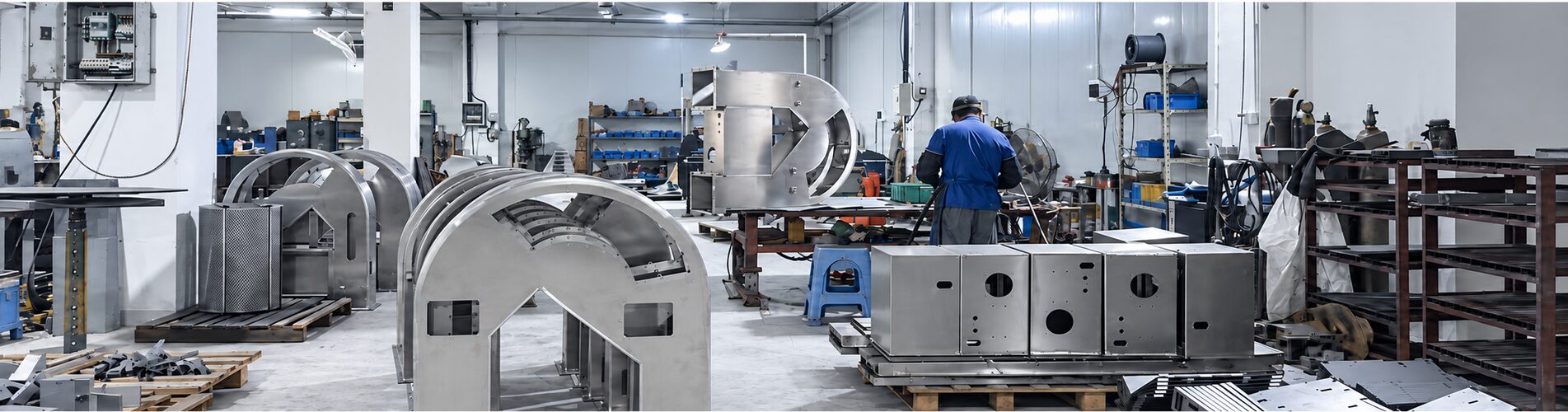
201, 304 and 316 for projects requiring corrosion resistance, cleanability or a premium visible finish.
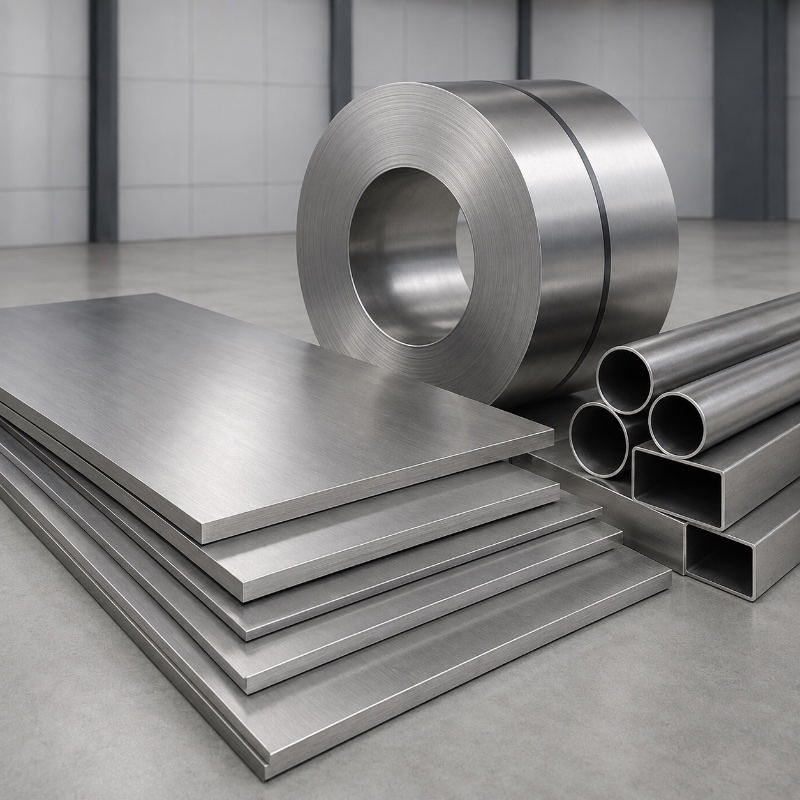
Stainless steel is selected where corrosion resistance, cleanability, exposed appearance or long-term durability matters more than the lowest material cost. Grade selection should reflect the actual environment, cleaning conditions, visible finish and project specification.
Common Grades
Best For
Main Selection Priority
What We Need
How to Choose
Use 304 for general corrosion resistance and fabrication, 316 for marine, chloride-rich or aggressive environments, and 201 for selected indoor applications where cost is more important.
| Grade | Choose it when | Typical products | Confirm before production |
| 201 | The product is used in a dry indoor environment and cost has higher priority than maximum corrosion resistance. | Selected indoor furniture and home products | Moisture, cleaning chemicals and whether 304 is required by the drawing |
| 304 | A practical balance of corrosion resistance, fabrication, appearance and cost is required. | Cabinets, enclosures, medical equipment housings and home products | Outdoor exposure, chlorides, cleaning method and visible finish |
| 316 | The application needs greater resistance to chloride-related pitting than 304. | Selected marine-related cabinets, process equipment and exposed products | Chloride level, temperature, crevices, drainage and the exact grade |
Common Grade Options
Common options include 201, 304 and 316 stainless steel. Grade selection should be based on the actual operating environment, surface requirements and project specification.
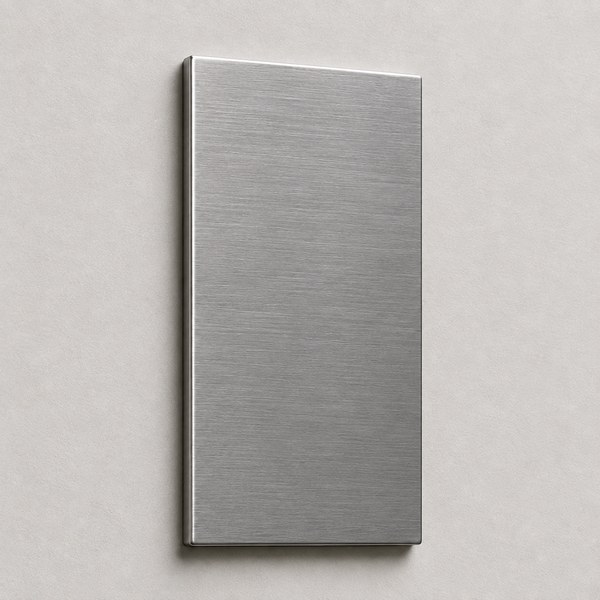
201 Stainless Steel
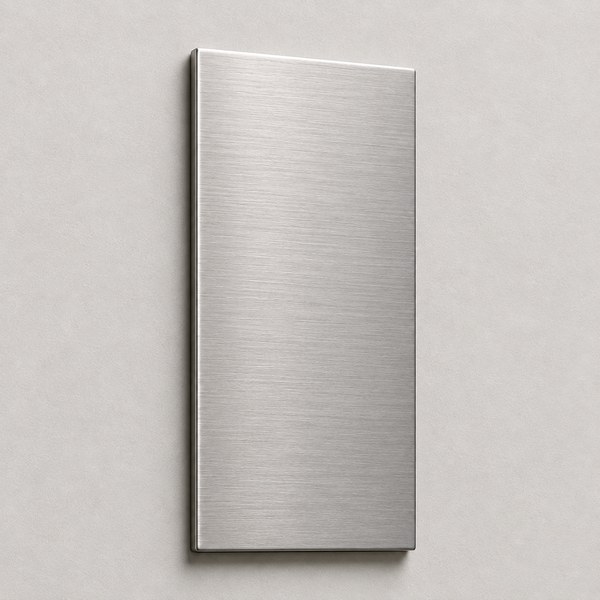
304 Stainless Steel
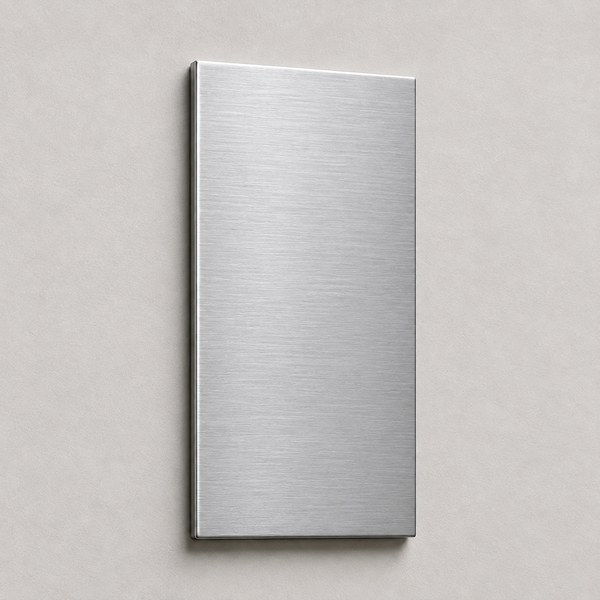
316 Stainless Steel
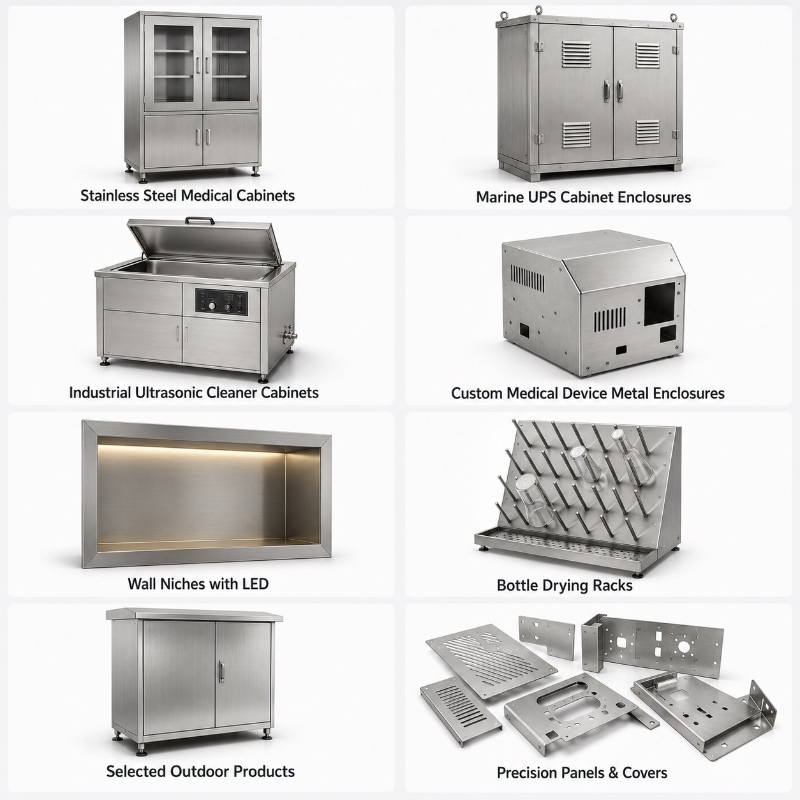
Best Fit Products:
Typical applications include medical cabinets, equipment enclosures, marine cabinets, drying racks, wall niches, kitchen-related products and exposed panels.
- Stainless steel medical equipment cabinets
- Marine-related UPS cabinet enclosures
- Industrial ultrasonic cleaner cabinets
- Custom medical device metal enclosures
- Wall niches and exposed home products
- Bottle drying racks
- Precision panels, covers and housings
- Selected outdoor and process-equipment products
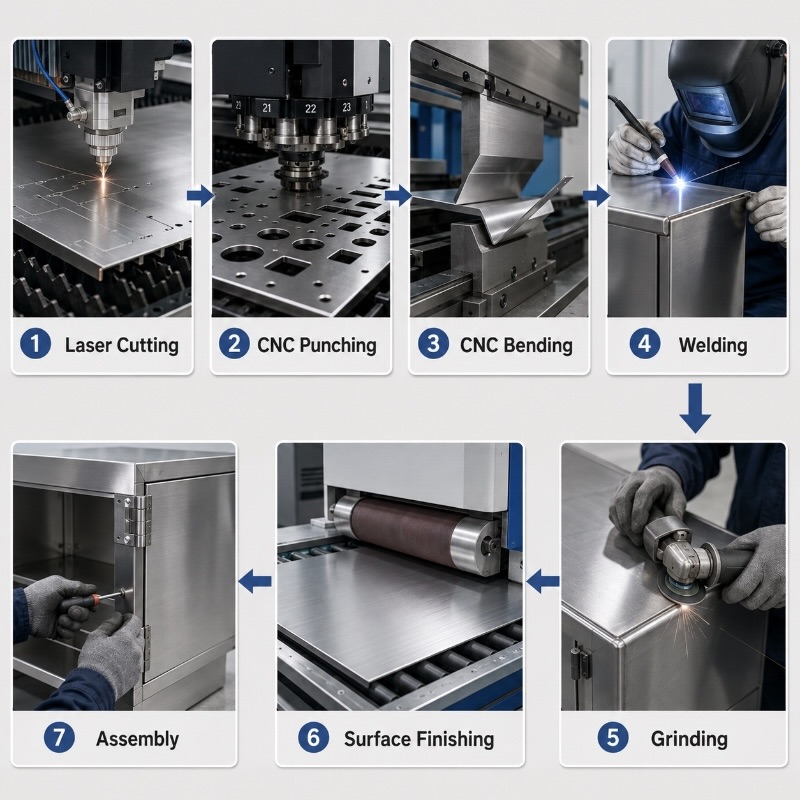
Compatible Manufacturing Processes
Stainless steel can be laser cut, punched, bent, TIG or MIG welded, ground, brushed, polished, passivated and assembled.
Surface Finish Options
Available finishes may include brushed, hairline, mirror-polished, bead-blasted and passivated surfaces. Powder coating can be considered for selected applications.
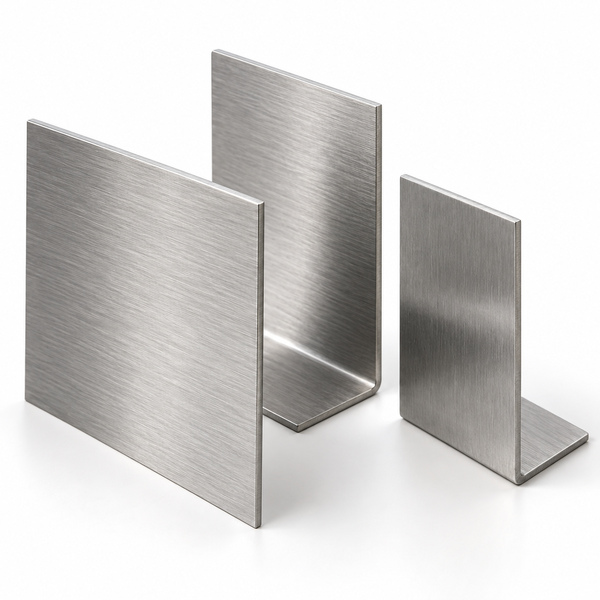
Brushed Finish
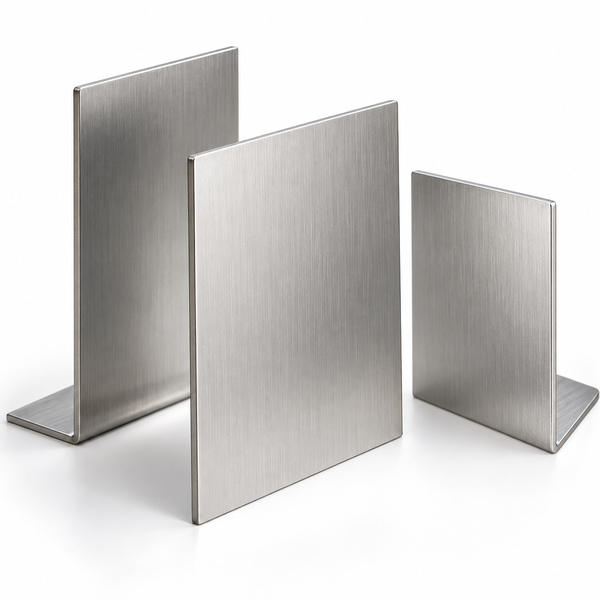
Hairline Finish
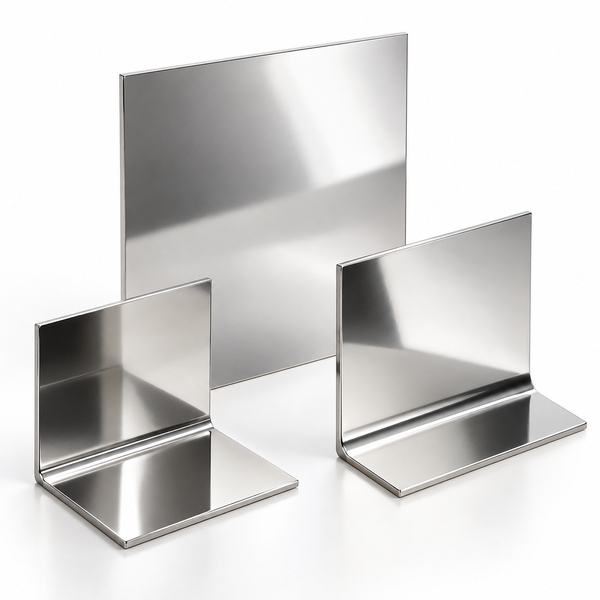
Mirror Polishing
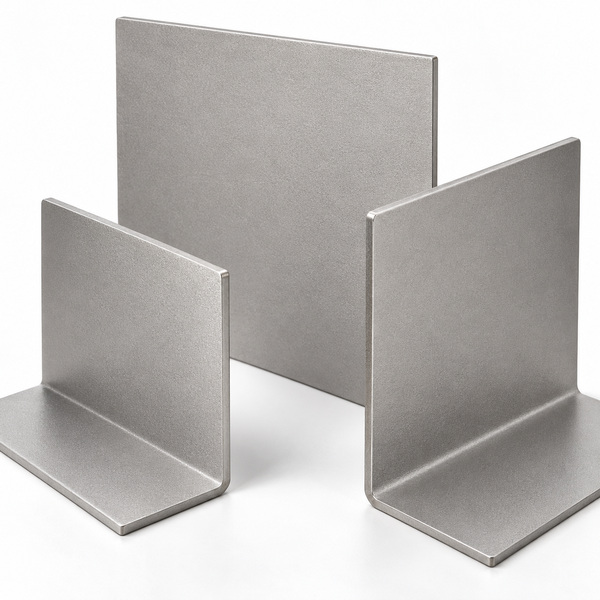
Bead-Blasted Finish
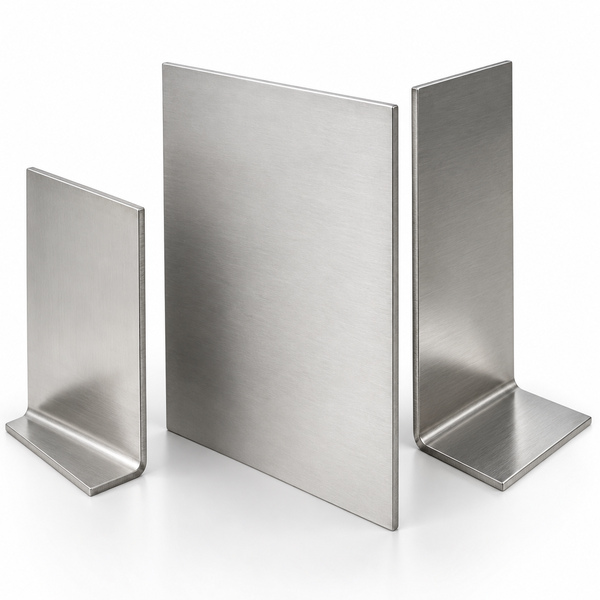
Passivation
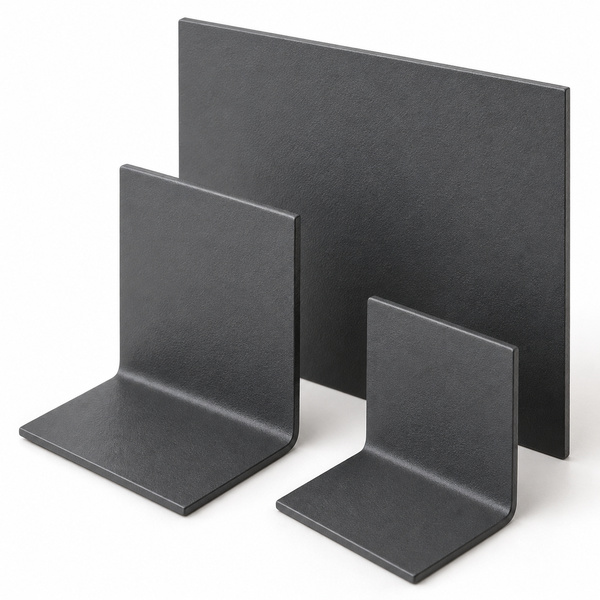
Powder Coating
Key Design Considerations
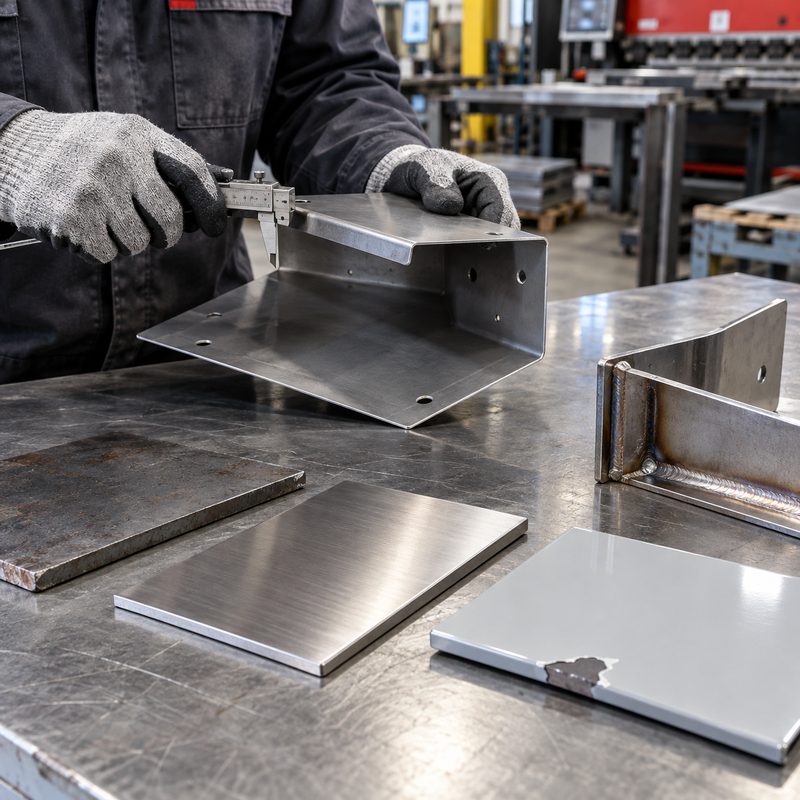
Review grain direction, visible welds, bend allowance, cleaning requirements and contact with dissimilar metals. Carbon-steel contamination should be avoided on visible or corrosion-critical surfaces.
304 vs 316
Visible Welds
Grain Direction
Cross-Contamination
Dissimilar Metals
Common Selection and Fabrication Risks
304 should not be automatically used in marine or chloride-rich environments. Poor weld finishing, surface contamination or inconsistent grain direction can reduce the final product quality.
• Replacing 304 with 201 Based Only on Cost
201 should not replace 304 without reviewing moisture, cleaning conditions and corrosion exposure.
• Treating 316 as Corrosion-Proof
316 offers improved chloride resistance but can still suffer pitting or crevice corrosion in unsuitable conditions.
• Ignoring Grain Direction
Mixed grain direction across visible panels can make an otherwise accurate product look inconsistent.
• Under-Specifying Weld Finish
If weld appearance, grinding level and visible-surface requirements are unclear, the buyer and fabricator may disagree on acceptance.
• Allowing Carbon-Steel Contamination
Contaminated handling, grinding or storage can cause staining and reduce surface quality on stainless steel parts.
What to Specify in the RFQ
| RFQ field | Why it matters | What the buyer should state |
| Grade and standard | Prevents unapproved material substitution | 201, 304, 316 or the exact project-specified designation |
| Service environment | Drives the 304 vs 316 decision | Indoor, outdoor, coastal, wash-down, chemical or other exposure |
| Visible finish | Controls appearance and finishing cost | Brushed, hairline, mirror, bead-blasted, passivated or approved sample |
| Drawing and thickness | Defines forming, welding and tolerances | 2D drawing, STEP file, nominal thickness and critical dimensions |
| Inspection documents | Affects purchasing and quality planning | Material certificate, inspection report or project-specific records |
FAQ
304 is a common general-purpose choice. 316 is usually considered when chloride exposure or more aggressive service conditions require greater pitting resistance. The correct choice depends on environment, temperature, cleaning, crevices and cost.
Yes. 316 is more resistant than 304 in many chloride environments, but it is not immune to pitting, crevice corrosion, contamination or poor drainage.
Only after the environment and project requirements are reviewed. 201 can suit selected dry indoor products, but it generally provides lower corrosion resistance than 304.
Brushed or hairline finishes are common for controlled directional appearance, while mirror and bead-blasted finishes serve different visual requirements. The approved sample, grain direction and weld finish should be specified.

Ready to start your project?
Send your drawing, material standard, thickness, service environment, finish, quantity and assembly requirements. We can review the information and suggest a practical material and manufacturing route for your approval before quotation.
Scan to Wechat :

Scan to WhatsApp :


 English